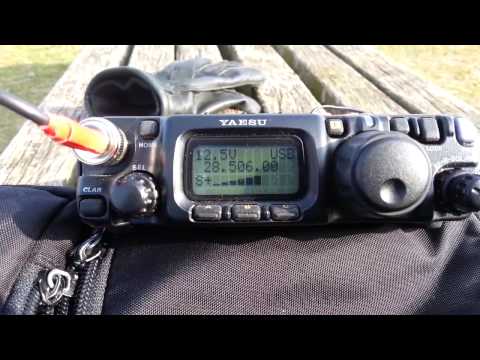
In the weekend of CQWPX I was in Minas Gerais… I stopped the car in uptown Lavras / MG and I marked presence in the contest. RIG: Yaesu FT-817ND + …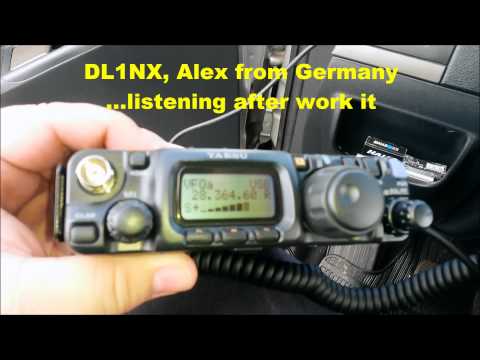
Month: August 2014
Contato QRP entre PP6AJM e PY2OI
Primeiro contato realizado com minha antena AlexLoop com meu transceptor Yaesu FT-817nd (5 watts). No momento falando com o Cláudio PY2OI em São …
DL1CR / QRP Mit kleiner Leistung im grünen Bereich
With low power in the green area made by Klaus Brueger DL2OCD and Christoph Muenzer DL1CR Thanks to my brother Detlef, Michael DL1SMG, Marco …
OSCAR-7 QRP # 81.561PRIMERA PRUEBA
Comenzando la tarde, Primer intento en Oscar 7 Excelente contacto con PV8DX, Paulo Frontera norte de Brasil. Trabajado en QRP TX Yaesu FT-817 4/5 watts.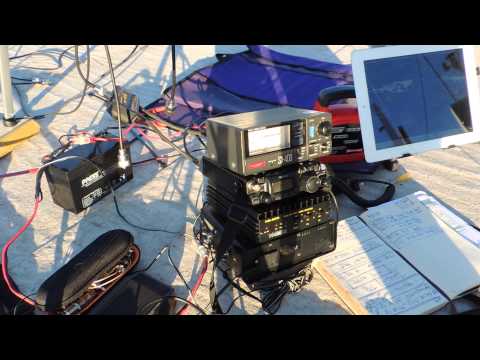
JG1XMV/P QRP Solar Power JG8QKO/8
Shaky video of a QSO With Toshi-san in Hokkaido from Omine Yama in Niigata. FT-817nd set at 2.5 watts. Using Solar power with small 1.2ah buffer battery and …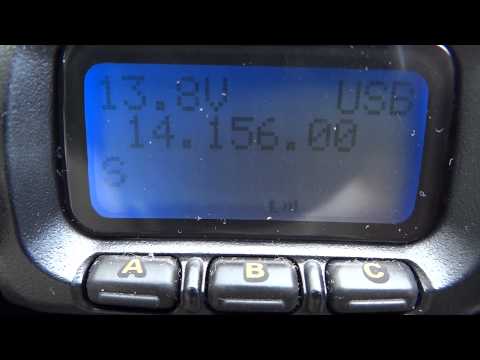
ESTACION QRP
Estacion completa qrp con la yaesu ft 817 y el ten tec 515 con antenas windoos 42 mts , directiva 3 elementos 10,15 y 20 mts y directiva moxon de 3 elementos.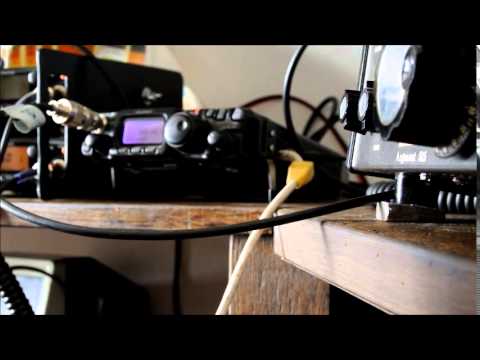
Desde Punta Negra en QRP
Con el FT-817 al máximo de potencia, con un dipolito para 40 metros montado en una caña de pescar y con las baterías de LiPo. Muy buena la escucha pero …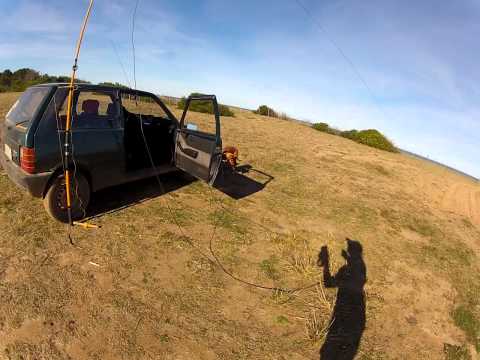
Yaesu FT-817 qrp 10 meter
Nice qso on 8/8/14. With kg2ra and k2yny.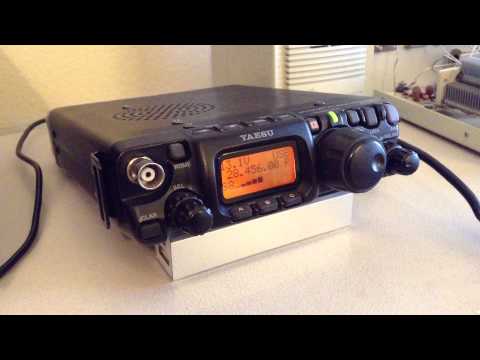
ft817ND+Quad “Bamby” in 11m- 9/07/2014
my first test with my new antenna for portable station.quad Bamby seems to be very well….. 73.
Yaesu FT 817 speaker replacement
Replacement of the stock speaker with a much better and wet-resistant one. Audio qualitiy on RX is improved, as well as the final reachable loudness. Referri…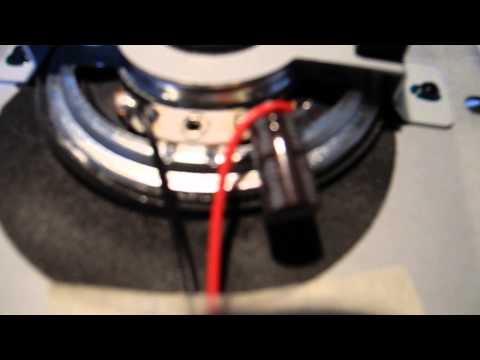
YAESU FT 817
A brief listen on the Yaesu FT 817. Just using a small dualband magmount on top of the microwave!
Testen met PD2JPD op 10m
PD2JPD’s nieuwe Yaesu FT-817ND uittesten met mijn Yaesu FT-757GX.
Yaesu FT817ND & KF5INZ Easy Digi interface running PSK31 on iPad
PSK31 running on my Apple iPad using the KF5INZ interface. The QSO was a little messy as I had not set macros up correctly but hopefully the video will give …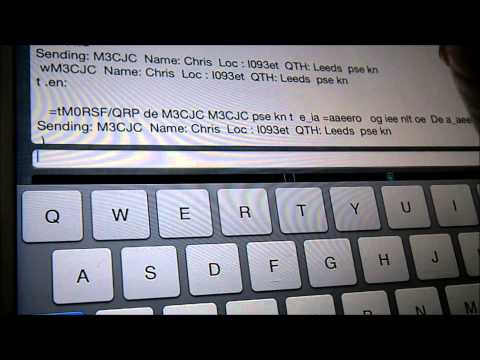
Using the FT-817nd with a “dirty amp”; the RM KL300P
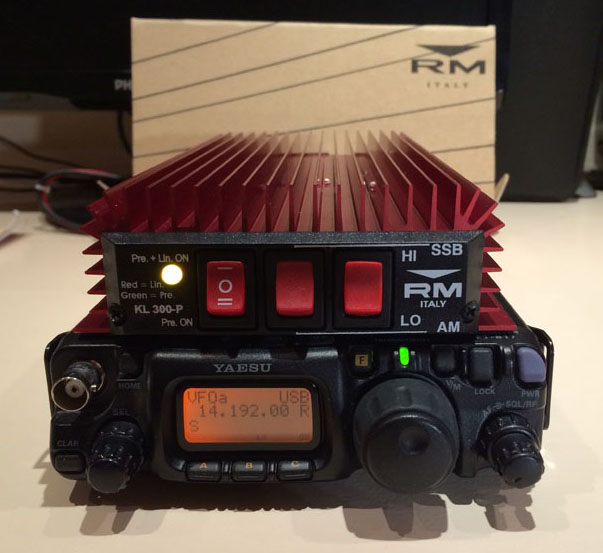
FT-817 with the RM K300P
Lately I’m trying to improve my portable HAM Radio setup because I want to do some activations for Castles On The Air (COTA) and WorldWide Flora & Fauna (WFF).
The idea for the activations is that you take all the HAM radio gear you need to make your contacts and carry them to the end location which can be in my case a castle or a nature park. From there you will then make your contacts.
You can imagine, if you need to carry everything to your transmitting location, you want to carry as little as possible! And so started my search for the best and lightest HAM setup possible. 🙂
My Setup
At the moment I’m using the Yaesu FT-817nd plus a manual tuner with built in 1:4 balun so I can use a random length wire antenna with that. I’m using a lot of different antenna’s by the way, depending on my mood and the circumstances.
I’m also a fan of the Hy End Fed which is an end fed antenna made by some guys here in the Netherlands. It works on the 10m, 20m and 40m band and doesn’t need any tuning. Plain, old home brew monoband dipoles are also great in a lot of circumstances. I made a lot of them, using them in all kinds of situations.
Although I also have a Yaesu FT-857D I prefer the FT-817nd because it works also just on batteries. With that you have the lightest setup possible! Just the FT-817nd, a tuner and an antenna wire will already do the trick! 🙂 And the FT-817 is just a nice little rig, almost a toy, so I anyway like it.
For my battery power I just bought a Tracer 12 volt, 14Ah Lithium Polymer Battery Pack. Although not very cheap, it is small and light and should give me enough juice to use the FT-817nd together with the KL300P. I replaces the connection on the Tracer with some Anderson Power Poles to make connecting things to it a bit safer and easier.
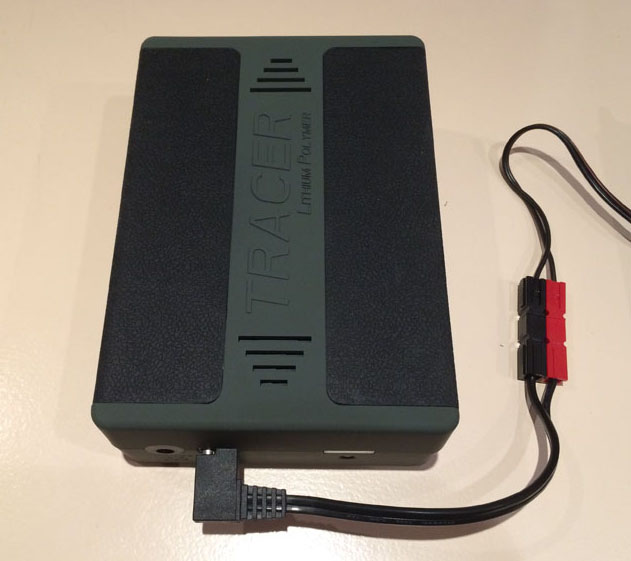
Tracer 12v 14Ah Lithium Polymer Battery Pack
More Power!
Because the FT-817nd has a maximum of 5 watts I was looking for some more power. When you go through all the trouble of walking to the activation location you want to be able to talk to people in the end, also if propagation isn’t so great!
I know there are some nice HAM linears available but they either are to big, to expensive or both! The Tokyo HighPower HL-45B is one of those and I do also like the RM HLA 150 linear from Italy. They both have all the band filters built in and give a pretty clean signal for this type of amplifier.
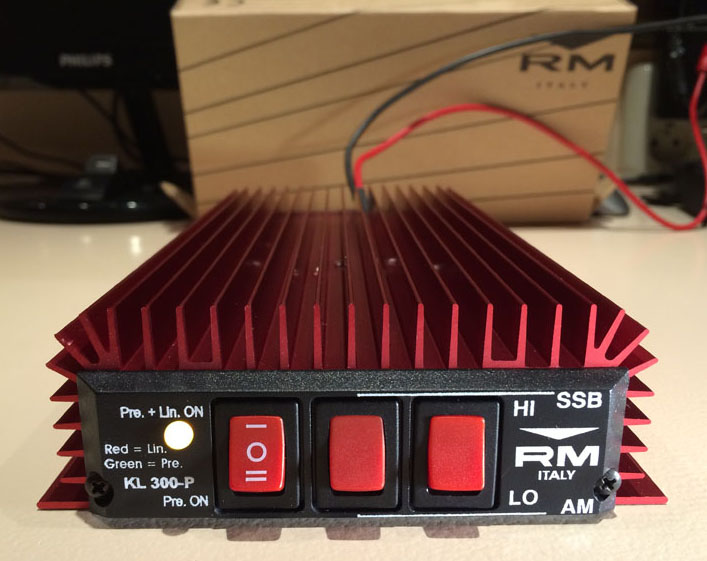
The RM KL300P Linear Amplifier
I decided in the end to go for the RM KL300P linear. It’s a small (!) HF linear with max 300w output on SSB when driven by max 10w input. The bad thing about it is that it doesn’t have any filters built in. The good thing though is the size (!) and the value for money.
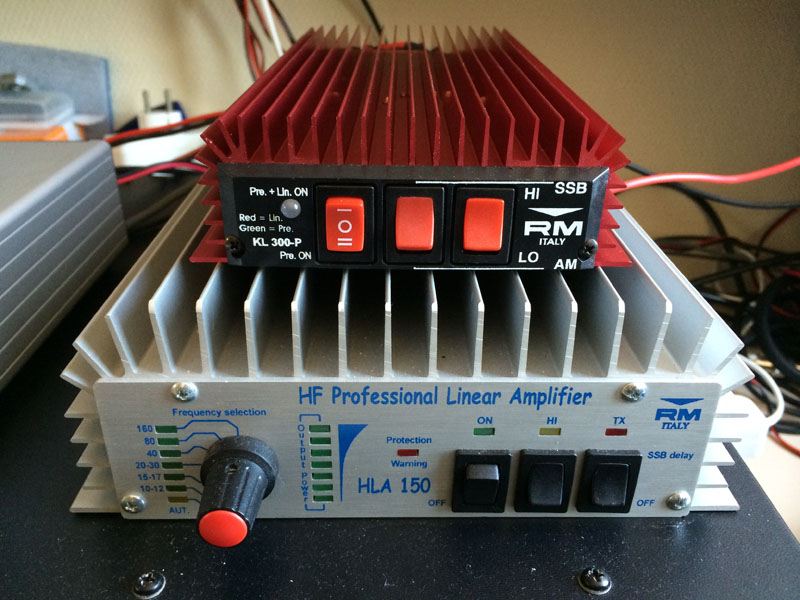
(Small) Size Matters!
The price of the KL300P is around 135 euro (185 USD) and will give you 300 watt, so it’s very affordable! The Tokyo HighPower (THP) linear in comparison costs 670 euro (925 USD) and will give you 45 watt(!)
A quick calculation shows me that the THP gives me 1 watt per 20.5 USD, the KL300P gives me 1 watt per 0.61 USD! The THP will give you bandpass filters though, that are missing in the KL300P but still, the price difference is just to much! Especially as, in my case, you are not using it very often. Next to this the THP is just to bulky to carry around with you and is in all aspects not an option for me.
I know the Italian RM linears are not allowed in the USA but in most other countries they are. In the Netherlands, where I live, you’re allowed to use any equipment if you have a HAM license as long as you keep to the rules of your license. I have a full HAREC license (comparable to the Extra license in the USA) so I’m allowed to use any and all HAM radio equipment.
Filtering
I would not use these RM linears from home without adding good filters, for sure a low pass filter to keep the neighbors happy! My base setup is a Yaesu FT-1000mp Mark V plus an Ameritron AL-811HD linear amplifier so at home I anyway don’t need the KL300P.
As long as you don’t over drive the RM linear the disturbance to other HAM operators can be kept to a minimum, I think. The FT-817 anyway doesn’t have more than 5w which is halve of what you can use to drive the linear on SSB. And of course, when you use the RM linear close to buildings or places where people live, you should at least use a low pass filter. One that cuts off all harmonics above 30 mHz that could otherwise show up in some electronic equipment.
The low pass filter still doesn’t remove all interference but it’s a minimum addition when using the linear at home I think.
To get the same power the Tokyo High Power gives you (45w) you only need to drive the KL300P with 1 watt. In the specifications it says this is not possible on SSB but in practice it is and this will give you about 40w output.
Conclusion
I did some quick tests using the KL300P With the FT-817nd, driving it with maximum 5 watt and found that the values in the following table were reached. The amount of amperes needed is also very important to me because this shows me what battery to take.
| FT-817 input | KL300P output | Linear Setting | Amperes |
|---|---|---|---|
| 5 w | 200 w | HI | 14 A |
| 5 w | 100 w | LO | 8 A |
| 2.5 w | 150 w | HI | 10 A |
| 2.5 w | 30 w | LO | 4 A |
| 1 w | 40 w | HI | 4 A |
| 1 w | – | LO | – |
One, for me not so positive point about the KL300P (next to the no filtering) is that when you turn on the linear, you also get the pre-amp “for free”. You cannot turn the pre-amp off when you’re using the linear. Especially in situations when there are some strong stations around you don’t always want a pre-amp.
Another point to think about is that the linear works with a SWR of maximum 1:1.5 (!) So you should have a good antenna and / or a good tuner to get the SWR as low as possible.
All in all, if you look at what you get for the money it’s a great little amp that makes my portable configuration perfect….. for now…. 😉
This article was first published on www.pa1ca.nl and is published here with permission of the author.
Adding a CW filter to my trusty FT-817
I decided to add a CW filter to my FT-817. Although I would hardly call it a mod, it still falls under the heading of “doing a modification” I guess, so I will describe it here.
A month or 2 ago I decided that it’s time to do another new thing in this nice Radio Amateur hobby we have. I decided to learn “the code”, a.k.a. CW, a.k.a. morse code!
I will write about my experiences in doing this some other time but suffice it to say that in CW mode you really need filters. Without a filter you can hear 5 (or more) different contacts going on at the same frequency at the same time. It’s very difficult to understand in the end who you’re talking to, especially for a person just starting out in morse code.
In the end I decided to get a 500Hz filter. This will remove more or less 80% of other signals as long as I tune (zero beat) right. The 300Hz filter would be a bit to narrow and would only work good in contest situations, not in the day to day CW contacts.
Putting the filter wasn’t much of a mod I must say. The people at Yaesu already made room for it in the transmitter and they did this pretty fool proof. You have to push the filter on top of a few pins; 3 on the left side and 4 on the right side which makes it pretty well impossible to do this wrong!
Anyway, as with my other mods I will show a few pictures of how it looks in a before and after situation.
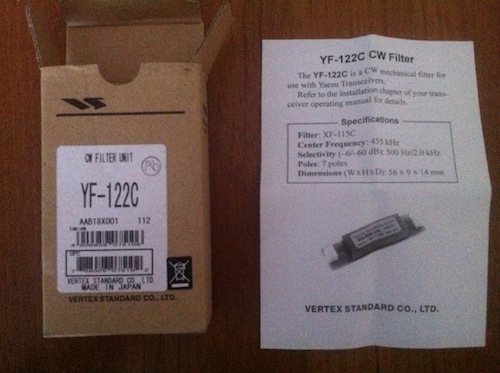
The start; box and instructions

The before situation. You can see at the bottom, next to the ribbon cable some open space where the filter will be placed.

A close up of the same open space where the filter will be put.

The filter is put in. As you can see there are 3 pins on the left and 4 on the right of the filter so it’s (almost) impossible to put it in the wrong way!
That’s it! It sounds simple, it looks simple and it was simple! 🙂
This article was first published on www.pa1ca.nl and is published here with permission of the author.
DL1CR NN2X – 5000 miles running 5 watts out of my FT-817
59 with 5 watt from Germany to Texas U.S.A with a FT817 running a 20m dipol 3m over ground on a small hill near by Hannover.